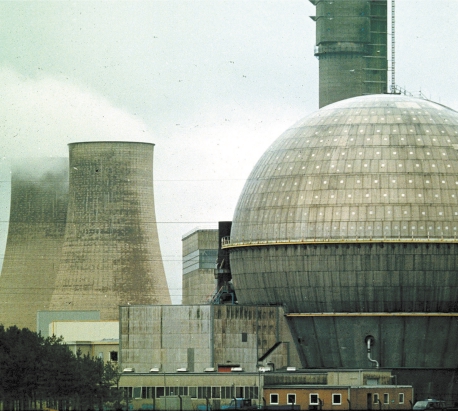
Sellafield
POLFOTO
Radioactivity
The Arctic is more vulnerable than most other
ucts from reprocessing, are increasing in the
parts of the world to the consequences of con-
Arctic marine environment.
tamination from airborne radiocesium. The
The greatest radiation threats in the Arctic
higher vulnerability in the Arctic arises from
are associated with accidents resulting in
the unique characteristics of food webs, the
releases of radionuclides to the environment.
use of land, and land cover in this region.
These include accidents involving nuclear reac-
Most radioactive contamination in Arctic
tors. Another environmental hazard is posed
lands is derived from fallout from atmospheric
by the large stockpiles of radioactive waste in
nuclear tests conducted during the period 1945
the Arctic. Efforts to reduce risks associated
to 1980. In some areas, fallout from the 1986
with these activities are ongoing, but much still
accident at the Chernobyl nuclear power plant
remains to be done.
is also a major source of contamination. Levels
This chapter addresses radioactive contami-
from these sources are declining with time as
nation in the Arctic and its potential conse-
the radionuclides decay.
quences for human and ecosystem health. The
A major source of radionuclides in the Arc-
previous AMAP assessment focused on current
tic marine environment is releases from Euro-
sources, levels, and radiation doses to humans.
pean plants that reprocess spent nuclear fuel.
The emphasis this time is on the behavior of
In contrast to the declining levels for other
radionuclides in ecosystems, the hazards asso-
radionuclides, the levels of technetium-99 and
ciated with potential sources, and how best to
iodine-129, which are long-lived fission prod-
address these hazards.
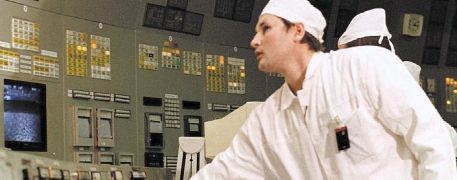
Closing Chernobyl
POLFOTO / KONSTANTIN DIORDIEV
The severity of effects is directly related to
60
Radioactivity
A concern for
dose. If the dose is high enough, the individ-
human and ecosystem health ual will die.
The goal of radiological protection efforts is
Radioactivity is a concern for human and eco-
to ensure that practices involving potential
system health because radioactive material
radiation risks are justified, dose limits are
emits ionizing radiation that has the ability to
complied with, and doses are kept as low as
damage living cells.
reasonably possible.
Radioactivity and radiation dose
New focus on ecosystem health
Radioactive materials contain unstable atomic nuclei. When the nuclei
Specific consideration of radiation doses and
decay to stable forms, they emit ionizing radiation. The activity is
effects on wildlife, plants, and ecosystem
measured as the number of disintegrations per second. The unit is the
health is a relatively new development. Tradi-
becquerel (Bq).
tionally, radiological protection has focused on
The health effects of radioactivity are related to the dose received.
The unit of dose is the gray (Gy). A more important unit for assessing
protecting humans with the assumption that
human health effects is the sievert (Sv), which measures effective dose.
this would also protect other components of
One sievert is equal to the effect in humans caused by one gray whole
the ecosystem. However, during the past few
body dose of gamma radiation.
years an international consensus has been
In regulating nuclear activities, 1 millisievert (0.001 sievert) is used
reached on the need to develop systems that
as a yearly dose limit for exposures of members of the public to all man-
can explicitly assess any potential harm to
made radiation. It corresponds to an increased risk of fatal cancer of
ecosystems and their components resulting
0.005%, or one additional cancer case among 20 000 exposed indi-
from exposure to radionuclides.
viduals.
Experience from laboratory studies and
The global average individual dose from natural sources of radiation
accidents has established that radiation can
is 2.4 millisieverts per year. However, this dose varies as a function of
geology and other conditions.
cause a number of detrimental effects in biota,
including mortality, reduced reproduction, and
genetic damage. Nevertheless, current knowl-
edge about effects on wild plants and animals
Cancer is the major human health concern
is limited and subject to large uncertainties.
At low doses, the main human health concern
Moreover, there is little consensus on the rele-
is that radiation may increase the risk of cancer
vance of these effects in the context of risk
and/or cause genetic effects by inducing damage
management. A better understanding of eco-
to the DNA. When radiation leads to genetic
logical effects and their uncertainties requires
damage in the egg or in the early developmen-
a framework for risk and impact assessment
tal stage of sperm, such damage can affect fetal
that can take into account the sensitivities of
development or make a person more suscepti-
various species and ecosystems.
ble to disease. The probability of cancer and
Factors that influence sensitivity include
reproductive damage increases with the dose.
exposure pathways, the extent of uptake to
For low doses, radiological protection as-
biota, and dose effect relationships. These
sumes that no threshold exists below which
can be ecosystem dependent and, for example,
there is no risk of damage. Thus, for low doses,
may vary with the availability of nutrients
the probability of adverse effects is considered
and biological productivity. They are also
to be proportional to dose.
species dependent, examples being high bioac-
Sensitivities of various
At high doses, the effects are not a matter of
cumulation of technetium-99 in lobsters and
organisms to acute
lethal dose of ionizing
probability. Radiation kills cells, causing local
the radiosensitivity of pines compared with
radiation.
burns, organ damage, and radiation sickness.
other trees.
Acute lethal doses can vary by several or-
ders of magnitude among and within species.
Viruses
However, effects on reproduction and popula-
Mollusks
tion health may occur at much lower doses
Protozoa
than those that would kill an organism. There
Bacteria
is very little information about the effects of
Moss, lichen, algae
low chronic exposures.
Insects
The work of assessing the effects of radia-
Crustaceans
tion on ecosystems is still in its early stages,
Reptiles
and AMAP is taking an active part in this
Amphibians
effort (see box on opposite page). The ulti-
mate purpose of an assessment framework
Fish
is to define doses or concentrations at which
Higher plants
effects in the environment would be expected
Birds
to be minimal, with an acceptable degree of
Mammals
confidence and in broad harmonization with
standards used to assess other hazardous
1
10
100
1000
10 000
Acute lethal dose, Gy
substances.
61
International efforts
Radioactivity
By highlighting inconsistencies among the management and regulatory approaches for radioacti-
vity and other environmental pollutants, AMAP activities have played a key role in driving the
development of a framework for assessing ecosystem effects of radiation. AMAP is also playing
a part in continued efforts, for example by the International Union of Radioecology (IUR), which
was one of the first international organizations to actively promote the need to focus on non-
human biota and to propose a system for impact assessment. The IUR initiative has subsequently
been carried forward in projects funded by the European Union, including one on environmental
effects of radionuclides in the Arctic. To date, one of the main outputs of this work has been the
selection of reference organisms. In this regard, the Arctic poses some special challenges because
of the low number of species and high vulnerability.
Proposed
Proposed
Proposed
terrestrial
aquatic
reference organisms
reference organisms
Lichens and bryophytes
Benthic bacteria
Gymnosperms
Macroalgae (marine)
Monocotyledons
Aquatic plants (freshwater)
Dicotyledons
Phytoplankton
Soil microorganisms
Zooplankton
Soil invertebrates
Mollusks
Herbivorous mammals
Polychaetes (marine)
Carnivorous mammals
Insect larvae (freshwater-benthos)
Bird eggs
Pelagic fish (planktotrophic)
Benthic fish
Pelagic fish (carnivorous)
Carnivorous mammals
Benthos-eating birds
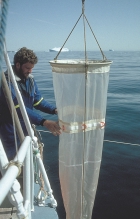
Plankton sampling
Fish eggs
in Disko Bay,
POLAR PHOTOS / HENNING THING
Greenland.
Risk management
There are several nuclear
power plants in the
Radiation risks can be reduced by specific
vicinity of the Arctic,
measures to protect the health and safety of
and two plants within
workers, the public, and the environment.
the AMAP area. Finland
Bilibino
A judgment has to be made as to what meas-
has two nuclear power
plants both situated on
ures are feasible based on prevailing technical,
the Baltic Sea coast:
social, and economic circumstances.
Loviisa on the Gulf of
In this context, a risk analysis consists of
Finland, and Olkiluoto
the following steps: 1) Defining the facility
on the Gulf of Bothnia.
Two reactor units are in
and operation; 2) Identifying the hazards;
operation at both sites.
3) Characterizing the hazards that present the
Sweden has four sites
greatest risk; 4) Postulating and analyzing pos-
with nuclear power
sible scenarios; and 5) Estimating the conse-
Kola
plants situated both on
quences. The results of the risk analysis pro-
the east coast (Forsmark
Loviisa
Olkiluoto
Leningrad
and Oskarshamn on the
cess are used to consider and analyze options
Forsmark
AMAP boundary
Baltic Sea) and the west
for prevention, preparedness, and response
Ringhals
Oskarshamn
Barsebäck
coast (Ringhals on the
strategies.
Kattegatt and Barsebäck
The previous AMAP assessment identified a
on Öresund). In Russia,
number of existing and potential sources of
there are two nuclear
Nuclear power plants
power plants in the
radioactivity in the Arctic. Some risk analyses
Arctic: the Kola plant on
of these sources have been included in the
Two nuclear plants are located in the Arctic,
the Kola Peninsula and
updated AMAP assessment. They address vul-
at Kola and Bilibino in Russia. There are also
the Bilibino plant in the
nerabilities and hazards associated with poten-
several nuclear power plants within 1000 km
Chukotka Region.
tial accidents involving nuclear power plants
The Leningrad nuclear
of the Arctic. Under normal operating condi-
power plant, situated
operating in or within 1000 kilometers of the
tions, routine releases from these plants are
outside the Arctic near
Arctic, nuclear-powered vessels, interim stor-
small and contribute little to radiation levels
St. Petersburg, is also of
age of spent nuclear fuel, improperly stored
or doses in the Arctic. The dominant radio-
interest for the AMAP
fuel elements, and decommissioned vessels
logical risks are those associated with potential
assessments.
containing spent nuclear fuel.
accidents. AMAP has attempted to estimate
For current radioactive contamination, the
the risks associated with accidents at the Kola
focus of the updated assessment is on new
nuclear power plant using a specific accident
information about levels in the environment.
scenario.
result in any acute radiation damage. Doses
received after eating contaminated food are
initially lower than external doses, but in-
crease and become more important with time.
Doses vary spatially depending on differences
in deposition, type of land cover, and associ-
ated food production. Reindeer herders and
others who consume high quantities of rein-
deer meat would receive significantly higher
annual individual doses of radiocesium from
food than other inhabitants of the same
region. For the high-consumption groups, rein-
deer meat contributes most of the internal dose
THOMAS NILSEN
during the first year after deposition. For other
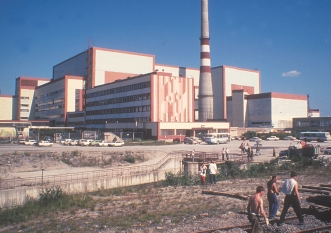
Kola nuclear power plant.
Model shows health risk associated with
people, dairy products and sheep meat are the
potential Kola plant accident
largest contributors. Doses of strontium-90 are
very low for all inhabitants.
The Kola nuclear power plant has four 400
It is predicted that reindeer herders and oth-
megawatt pressurized-water reactors. An acci-
ers with high reindeer consumption would get
dent here may have graver consequences than
annual ingestion doses that exceed 1 millisievert
one at Bilibino, which has four smaller reac-
for several decades after the accident, with
tors that are only 11 megawatts each.
much higher doses in the first few years. For
Recent studies focusing on northwest Rus-
other population groups, the consequences vary
sia and northern Norway have looked at the
geographically. If the deposition occurred in
consequences of hypothetical accidents at the
northern Norway (Troms (Romsa) and Finnmark
Kola plant. A severe accident would obviously
(Finnmárku)), ingestion doses could exceed
A comprehensive survey
lead to significant doses close to the plant.
1 millisievert for a few years after the accident,
of cesium in Finland and
Another concern is whether there would also
whereas this period would be about 10 years if
northwest Russia was
carried out in 2000.
be significant consequences farther away in
the deposition occurred in Murmansk Oblast.
The map shows cesium-
adjacent Arctic areas in the short or long term.
Potential consequences in other areas were not
137 concentrations in
Radionuclides efficiently transfer to some Arc-
assessed.
the top three centimeters
tic ecosystems, where they can remain for a
This scenario confirms that residents of
of the humus layer.
long time. An assessment therefore has to
Arctic ecosystems are particularly vulnerable
include long timescales. The scenarios that
to radiocesium contamination and that the vul-
were chosen for calculating doses after a hypo-
nerability persists for many years after deposi-
thetical accident represent worst-case events
tion. Although those who consume larger quan-
and their consequences.
tities of reindeer meat are particularly vulnera-
The highest individual external doses out-
ble, other people could potentially be exposed
side the plant facility would occur in the most
to high doses, especially if they consume many
contaminated areas, but they are too low to
local products. The results clearly show the
need for an effective emergency preparedness
and response system, and the application of
countermeasures, should a major accident ever
occur at the Kola nuclear power plant.
Update on contamination from Chernobyl
One nuclear power plant accident has already
had consequences for the Arctic: the explosion
and fire at the Chernobyl nuclear power plant
in the Ukraine in 1986. This plant was more
than a thousand kilometers from the Arctic
Circle. Nevertheless, radioactive material from
the explosion was carried by the wind and
spread over large areas, including parts of the
Arctic. This source of radioactive contamina-
tion was described in the previous AMAP
Cesium-137, Bq / kg
assessment. The major contaminated area out-
5000-10000
side the immediate vicinity of Chernobyl
3000-5000
extends from the Leningrad region of Russia
1000-3000
across southern Finland to parts of Sweden
300-1000
and Norway. A comprehensive survey of
200-300
150-200
humus layers in 2000 in parts of the contami-
100-150
50-100
nated area in Finland and northwestern Russia
0-50
provides a picture of levels of radiocesium (see
map). Fourteen years after the accident, the
Nuclear-powered vessels
63
fallout from Chernobyl is still evident in the
Radioactivity
higher levels of cesium-137 in the whole
There are several locations within the Arctic
southwestern part of Finland and in the area
where nuclear-powered vessels are being built,
southwest of St. Petersburg in Russia.
based, maintained and decommissioned. The
size of the reactors on nuclear vessels is typ-
Progress in reducing risks
ically about one tenth of that of a typical
associated with nuclear power plants
nuclear power plant reactor. However, the
number of operating reactors and their main-
A number of programs have been initiated to
tenance and decommissioning create an
improve the safety of nuclear activities in or
increased potential for accidents. The AMAP
near the Arctic, especially at nuclear power
2002 assessment contains updated information
plants in Russia. Most of the programs are
on the status of submarine decommissioning in
based on cooperation between Russia and
the Russian Northern Fleet and associated
other Arctic countries.
waste management issues.
Bilibino nuclear power plant consists of
Since the previous AMAP assessment, the
four small, water-cooled, graphite-moderated
nuclear submarine Kursk was lost in the
reactors. Efforts at Bilibino have focused on
Barents Sea and was subsequently recovered.
improving the safety of day-to-day operations.
Projects have targeted training for plant staff,
The Kursk accident did not lead to
providing an analytical simulator to enhance
environmental contamination
training effectiveness, providing safety mainte-
nance equipment and technology, and estab-
On August 12, 2000, the Russian submarine
lishing improved communication links with
Kursk sank in international waters north of
Moscow.
the Kola Peninsula in the Barents Sea. It was
Efforts at the Kola plant are also directed
powered by two small nuclear reactors, which,
toward improving the safety of day-to-day
operations and upgrading critical plant safety
systems. The projects have focused on devel-
Kursk
oping emergency operations instructions, up-
accident
grading the confinement system, and improv-
ing the engineering safety systems. Projects are
Murmansk
also in place to perform safety assessments, to
Kola Peninsula
N O R W A Y
teach staff how to perform plant safety analy-
sis, and to provide a full-scale simulator to
enhance staff training.
R U S S I A
The Leningrad nuclear power plant, located
outside St. Petersburg, consists of four reac-
S W E D E N
F I N L A N D
tors. Safety enhancement efforts are similar
to those at the Kola plant. Projects are in
as designed, automatically shut down during
The Kursk accident site.
place for developing emergency operations
the accident. The submarine was not carrying
instructions, providing modern safety mainte-
any nuclear weapons. In 2001, the Kursk was
nance tools and techniques, and performing
raised, transported, and moored on a floating
in-depth safety assessments. In addition, pro-
dock in Roslyakov near Murmansk.
jects are underway to provide an improved fire
Several expeditions monitored levels of
detection system and an emergency response
radioactivity in the water and sediment, both
program.
while the Kursk was at the bottom of the Ba-
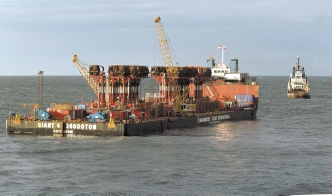
The barge Giant-4 trans-
In the case of an emergency, it is critical that
rents Sea and during the recovery operation.
porting the salvaged
accurate information is available promptly for
There was no indication of radionuclide leak-
wreck of the Kursk.
emergency response. Upgrading of the emer-
gency notification system at the Leningrad and
Kola nuclear power plants has been continued.
There is now an automatic environmental radi-
ation monitoring and notification system in
place. These are based on satellite communi-
cation and should allow automated message
transmission and direct communications with
central Russian authorities as well as to the
Nordic countries, independent of ground com-
munications. Further networks have also been
established, and soon all Russian nuclear
power plants except Bilibino will have direct
emergency communication links with central
government agencies responsible for nuclear
and radiation emergencies.
POLFOTO / SEMYON MAISTERMAN
age from the submarine and the results show
Several programs address the waste situa-
64
that the accident and subsequent recovery of
tion, which, in addition to spent fuel, includes
Radioactivity
the Kursk did not lead to any significant re-
solid and liquid radioactive wastes from sub-
leases of radioactivity to the Arctic environment.
marines and other nuclear-powered vessels.
The recovery of Kursk has substantially
An effort is also underway to launch projects
reduced the risks of radionuclide releases
related to remediation of the Andreeva Bay site
from its reactors to the marine environment.
that contains the largest concentration of radio-
However, until the fuel is removed and trans-
active wastes in northwest Russia. Other pro-
ported to proper storage, the potential for
jects include developing a mobile processing
releases of radionuclides into the environment
facility for liquid nuclear wastes and new in-
will persist.
terim storage for spent nuclear fuel derived
Doses to the public are a minimal risk from
from decommissioned submarines. Large
a sunken submarine lying intact on the sea
amounts of spent nuclear fuel and radioactive
floor. Local seabed contamination may, how-
wastes are currently stored at the Atomflot
ever, be a concern should leakage of radionu-
facilities near Murmansk, including the float-
clides occur. The major threats to humans are
ing storages vessels Lepse, Imandra, and Lotta.
associated with atmospheric releases from sub-
The Lepse is in a particularly poor condition
marine reactor accidents.
and there has long been a desire to remove the
spent fuel and radioactive waste from the ves-
sel and store it elsewhere.
Storage of spent nuclear fuel
Since the previous AMAP assessment, the
and other wastes raise concerns
overall approach of these programs has been
The decommissioning of nuclear submarines
to adopt an integrated solution and a coopera-
in the Russian Northern Fleet is continuing.
tive effort in which all the major steps from
As of November 2001, a total of 109 nuclear
generation to disposal of the waste have to be
submarines had been taken out of operation.
evaluated before making any decision about
Of these, 41 have been dismantled and 68 are
options for resolving the issue. These projects
represent ongoing cooperation to reduce the
risks associated with radioactive wastes in the
Arctic. Many other projects are being con-
sidered and may be initiated in the near future.
Amount of radioactive waste
dumped at sea has been overestimated
Until 1991, the Soviet Union dumped radioac-
tive waste in the Arctic Seas, including subma-
rine reactor compartments containing spent
nuclear fuel and part of the reactor compart-
ment of a nuclear icebreaker. This resulted
in local contamination around the dumping
sites, but according to previous assessments by
AMAP and by the International Atomic Energy
Agency (IAEA), the major risks of releases
are in the longer term, after the containment
PER-EINAR FISKEBECK
material corrodes. The IAEA study concluded
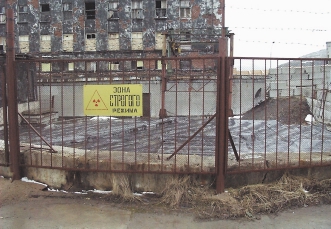
Andreeva Bay
moored awaiting dismantling. Fifty of these
that risks to members of the public from these
the main Northern Fleet
submarines contain spent nuclear fuel. It is
dumped wastes are small.
facility for storing
expected that a further 18 to 20 submarines
There have been efforts to estimate the total
nuclear waste.
will be dismantled each year. During opera-
content of radioactive material in the dumped
tions that involve handling of spent nuclear
fuel, there is an increased risk of accidents that
Total activity, PBq
might cause both local and widespread atmos-
25
pheric contamination.
Some of the spent fuel from refueling and
20
decommissioning has been transported to
Mayak, in the Urals, for storage and reproces-
15
sing. However, most of it is still in temporary
storage on the Kola Peninsula. Although the
temporary storage facilities pose a smaller
10
threat for acute accidents with widespread at-
mospheric contamination than accidents in op-
5
erative reactors, some of the temporary storage
Total activity of radionu-
clides in nuclear reactors
is causing serious local contamination, which
0
dumped in the Kara Sea.
may be spreading into the marine environment.
1960
1970
1980
1990
2000
submarines and the icebreaker reactor, both by
the most contaminated zone in the archipelago.
an international project and within Russia.
In 1978, gamma radiation levels were as high
Previous Russian estimates, from 1993, were
as 5 microsieverts per hour. There are also
published in the so-called White Book. The
traces of radioactive contamination of land
Sukhoy Nos
Peninsula
most recent estimates show that the White
areas from an above-water explosion in 1961
Book underestimated the activity in the reactor
and from an underwater explosion in 1955.
Matochinkin
compartment from the Lenin icebreaker and
There is also new information about the
Shar
overestimated the total activity of submarine
United States test site on Amchitka, where
Bashmachnaya
Inlet
reactors containing spent nuclear fuel. Recent
three underground tests were carried out be-
Chernaya Bay
analysis of the revised figures, also taking into
tween 1965 and 1971. When the previous
account the physical decay of radionuclides
AMAP assessment was written, no detailed
present in the dumped ship reactors, shows
sampling of this site had been carried out since
that the White Book overestimated the total
the late 1970s. However, routine sampling and
Contaminated sites on
activity in all the reactors dumped near No-
monitoring of the test site for increased radia-
Novaya Zemlya, where
the Soviet Union carried
vaya Zemlya by more than a factor of three.
tion levels have been ongoing since the 1970s.
out weapons tests (above),
Modeling of the movement of radionuclides in
and the Amchitka test sites,
where the United States
Nuclear detonations and
conducted tests (left).
nuclear weapons accidents
Bering Sea
Amchitka
The previous AMAP assessment concluded
that fallout from atmospheric nuclear weapon
Test sites
tests conducted from the 1940s through 1980
N
was the major source of anthropogenic radio-
Pacific Ocean
nuclides in the Arctic environment. Radioactive
Novaya Zemlya
contamination from these tests is declining.
10 km
Cesium-137, uBq / m3
the environment of the Amchitka site had indi-
10 000
cated that discharge from groundwater to the
ocean could have started as early as 1975, ten
1000
years after the first underground tests at the site.
In 1996, leakage of radionuclides to the
100
terrestrial and freshwater environments was
reported by an environmental organization.
The range of aerosol
10
The marine environment was not addressed
cesium-137 concentra-
in the report. In response, a federal, state,
tion from the atmos-
1
pheric tests was declin-
tribal, and non-governmental team conducted
ing in northern Finland
a freshwater and terrestrial sampling program
until the Chernobyl acci-
0.1
in 1997, with additional sampling in 1998.
dent in 1986.
1965 1970 1975 1980 1985 1990 1995 2000
At the Long Shot test site, where leakage of
The largest atmospheric detonation anywhere
radioactive gases to the near surface occurred
took place at the Soviet test site at Novaya
in 1965, elevated levels of tritium in freshwa-
Zemlya in October 1961. There have also been
ter were observed in 1997. Contrary to the
several underground nuclear detonations in
claims of some environmentalists, the results
the AMAP area. The largest of these were con-
of the 1997 and 1998 sampling did not pro-
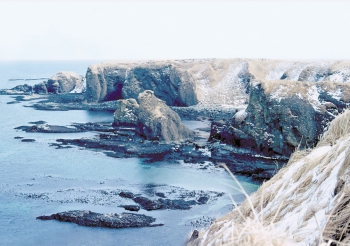
Amchitka.
ducted by the Soviet Union in Novaya Zemlya
in October 1973 and by the United States at
Amchitka, Alaska, in November 1971.
Updates on the local situations
at Novaya Zemlya and Amchitka
The tests at Novaya Zemlya resulted in local
contamination. Since the previous AMAP
assessment, two new reports on the subject
have been published. Surveys have docu-
mented radioactive contamination in four
areas: Chernaya Bay on the Yuzhny (South)
Island, Sukhoy Nos Peninsula on Severny
(North) Island, Bashmachnaya Inlet on Yuzh-
ny Island, and the tidal area of the Matochin-
kin Shar Strait.
Chernaya Bay was the site of a near-surface
explosion in 1957 as well as several other tests.
The epicenter of the near-surface explosion is
MICHAEL J. WYNNE
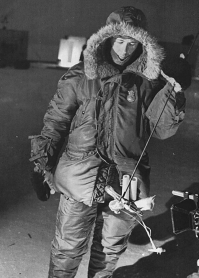
vide any evidence of the leakage of radionu-
66
Plutonium adheres strongly to particles.
clides from the underground explosion cavities
Radioactivity
Measurements at Thule show that it is asso-
into the terrestrial and freshwater environment
ciated with particles in bottom sediment.
on Amchitka. In addition, the hydrogeological
The distribution of the contamination is un-
regime at Amchitka does not provide the phys-
even, and previous estimates of the amount of
ical means for transporting the radionuclides
plutonium in the sediment did not fully take
from the test cavities to the reported surface
this into account. A more recent estimation
location.
method provides more accurate results. So far,
These results do not mean that leakage from
only six sediment cores have been analyzed,
the Amchitka underground nuclear tests is not
but the results indicate that the quantity of
occurring or will not occur. Modeling of the
plutonium in marine sediments at Thule is
movement of groundwater predicts that leak-
comparable to the amount that was estimated
age to the marine environment could occur
to have been lost (2.5-3 kg). Nonetheless, there
over timescales of 20 to 3000 years. There have
remain substantial uncertainties in such esti-
also been some concerns raised about geologi-
mates of the quantity of plutonium in Bylot
cal forces acting on Amchitka, with suggestions
Sound sediments.
that stresses around a major fault could open a
Some animals live buried in the contami-
fracture from the island into the marine envi-
nated sediment or on the sediment surface.
ronment. These suggestions are still open to
Plutonium concentrations in these organisms are
scientific debate. Assessments of the role of
generally one to two orders of magnitude lower
geological forces acting on underground island
than in the surface sediment, showing that the
test sites to create a `fast pathway' for radionu-
plutonium is not very bioavailable. One bi-
clide leakage could be relevant to both Am-
valve sample had a much higher level, which
chitka and Novaya Zemlya.
was probably due to chance ingestion of a hot
particle rather than accumulation of bioavail-
able plutonium. Levels in most animals living
in the sediment are low and the plutonium is
not readily transported to surface waters.
Local contamination
from civilian nuclear detonations
From 1967 to 1988, the former Soviet Union
conducted a number of civilian nuclear deto-
nations to assist in mining and construction
Thule Airbase
work. At three sites in or near the Arctic, the
detonations led to severe local contamination,
G R E E N L A N D
as discussed in the previous AMAP assessment.
New information from the Kraton-3 and Cry-
stal sites in the Sakha Republic shows that
local contamination of the sites remains, de-
spite earlier clean-up efforts. In the immediate
vicinity of the Kraton-3 site, the plutonium
concentration in lichen in the early 1990s was
780 times higher than background. However,
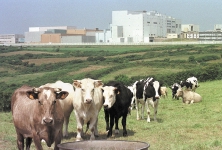
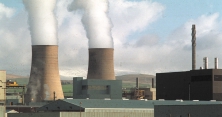
Thule Airbase. Member
the contamination is highly localized: a few
of the American clean-up
kilometers away from the site, the levels are
crew removing a conta-
much lower. Measurements of the bottom sedi-
minated revolver from
the accident site.
ment of the Markha River near the explosion
MOGENS LADEGAARD / SCANPIX
site show that there has been a migration of
plutonium to the river, with a potential for
Update on local contamination at Thule
remobilization and transport over larger areas.
In 1968, an American strategic bomber
crashed on the sea ice in Bylot Sound near the
Laptev
Thule Airbase in northwest Greenland. It car-
Sea
ried four nuclear weapons, and some of the
East Siberian Sea
plutonium in these weapons was dispersed
into the environment as a result of the aircraft
Crystal
explosion and subsequent fire. Most of the de-
bris and contaminated ice was removed from
Kraton-3
the area. Some of it, however, sank through a
Kraton-3 and Crystal,
crack in the ice or could not be recovered from
two of the sites where
the ice. The ice-embedded material was dis-
the former Soviet Union
used civilian nuclear
persed into the water column during the fol-
detonations.
lowing summer when the ice melted.
67
Radioactivity
Arctic Ocean
POLFOTO / JOHN GILES
G R E E N L A N D
European reprocessing
plants and the ocean
pathways that carry
radionuclide-contami-
nated water to the
Sellafield
Arctic.
Atlantic Ocean
UK
Sellafield (upper photo)
Cap de la Hague FRANCE
and Cap de la Hague
POLFOTO
(lower photo).
Reprocessing and transport
of spent nuclear fuel
increase in the discharge of technetium-99,
reaching levels similar to those during the pre-
Fuel reprocessing is carried out to recover ura-
vious peak releases of this element in the mid-
nium and plutonium from spent nuclear fuel
1970s. This radionuclide is a long-lived fission
for reuse in reactors. Only 5-10% of spent fuel
Technetium-99, TBq / year
worldwide is subjected to reprocessing. Most
200
spent fuel from reactors is instead retained on-
site in interim storage. During reprocessing,
the radionuclides are brought into solution.
150
Waste solutions containing large amounts of
radionuclides have been discharged to the
100
environment during this process. There is a
well-documented history of discharges of var-
50
Sellafield
Discharges of techneti-
ious radionuclides to the environment, with
um-99 from Sellafield
cesium-137 dominating liquid discharges.
and Cap de la Hague,
Cap de la Hague
The potential for accidental releases to the
showing recent increases
0
environment of radionuclides in a liquid solu-
from Sellafield.
tion is greater than for all other stages of the
1970
1975
1980
1985
1990
1995
fuel cycle. The reprocessing plants that are
product with a half-life of 213 000 years. Tech-
most relevant to the Arctic are Sellafield on the
netium-99 is soluble in water and can thus be
northwest coast of England and Cap de la
transported over large distances in the marine
Hague in northern France.
environment.
The discharge of iodine-129 also increased
European plants have increased releases
during the 1990s, especially from Cap de la
of some radionuclides
Hague, where a new plant was put into opera-
tion in 1990. Iodine-129 is an extremely long-
Liquid radioactive waste from the Sellafield
lived fission product with a half-life of 16 mil-
and Cap de la Hague plants has been discharged
lion years. It is water-soluble and its release
via pipelines into the Irish Sea and the English
has been detected and traced within the Arctic
Channel, respectively, since the 1950s. Water-
borne radionuclides, including cesium-137,
Iodine-129, TBq / year
1.8
have been traced in northward-flowing currents
Cap de la Hague
1.6
and have been detected in the Arctic Basin.
1.4
In the late 1970s, there was a significant
1.2
reduction in routine releases from Sellafield.
1.0
In 1994, British Nuclear Fuels at Sellafield
0.8
started treating a backlog of old waste in an
0.6
Enhanced Actinide Removal Plant. The re-
0.4
Sellafield
Discharges of iodine-129
moval is effective for a number of radionu-
0.2
from Cap de la Hague
clides, but not for technetium-99. This treat-
0
and Sellafield.
ment of old waste resulted in a considerable
1970
1975
1980
1985
1990
1995
Ocean. The total discharge is ten times higher
nium is one example. Several hundred kilo-
68
than the total amount in the ocean from nat-
grams of plutonium from nuclear fuel repro-
Radioactivity
ural sources and from iodine-129 generated by
cessing have accumulated in the sediment of
weapons testing.
the Irish and North Seas. Measurements in
seawater show that some of the plutonium in
the sediment is being remobilized and trans-
Fuel reprocessing is a major source
ported via ocean currents into the Norwegian
to the Arctic marine environment
Sea, the Barents Sea, and eventually into the
The previous AMAP assessment showed that
Greenland Sea and Icelandic coastal currents
the input of cesium-137 from nuclear repro-
(see box on opposite page). Analysis of the
cessing plants is evident along the Norwegian
ratios of different isotopes of radionuclides
coast and in the Arctic Ocean. Since then, the
shows that the primary source of plutonium
increased discharges of technetium-99 and
in these waters is still fallout from past nuclear
iodine-129 have led to increasing levels of
testing. Through the remobilization of pluto-
these radionuclides in the Arctic marine envi-
nium, however, Sellafield is indirectly the sec-
ronment, in contrast to the declining trends for
ond most important contributor of man-made
other radionuclides. A time series from Hilles-
plutonium in Arctic seawater.
øy on the northern coast of Norway shows a
Taking into account the inventories of
steep increase of technetium-99 in seaweed in
radionuclides from reprocessing that were
the late spring and early summer of 1997.
presented in the previous AMAP assessment,
it is clear that the reprocessing of nuclear fuel
Technetium-99 releases from Sellafield, TBq / year
has been and still is a major source of anthro-
Technetium-99 concentration in Fucus, Bq / kg dry weight
pogenic radionuclides to the Arctic marine
200
400
environment. The current doses to Arctic in-
habitants from these sources are small. There
Sellafield
are, however, some uncertainties about the
150
300
Fucus
transport to, and effects of radionuclides in
the Arctic. Therefore, there is a need for fur-
ther assessment of the individual and collec-
100
200
tive doses from radionuclides discharged
from these and other sources. There is also
50
100
a need to consider impacts on Arctic popula-
tions and the environment when evaluating
discharge reduction measures.Technecium-99
0
0
discharges can be reduced using available
1990
1992
1994
1996
1998
2000
technology, but this step has not yet been
Technetium-99 releases
An analysis of the data suggests that the tech-
taken.
from Sellafield and activ-
netium-99 resulted from the rapid increase in
ity in Fucus seaweed at
discharges from Sellafield in the spring of 1994.
Hillesøy, northern Nor-
Transport of spent fuel in the Arctic
Elevated levels of technetium-99 have also
way.
is a potential risk
been detected in the southern Barents Sea.
The spatial distribution, with higher activities
Spent nuclear fuel for reprocessing is some-
near the coast, is consistent with current un-
times transported by ships, as is the resulting
derstanding of the prevailing ocean currents.
reprocessed fuel. Between 1992 and 1999
At present, Sellafield is the main contributor of
there were six shipments of plutonium and
technetium-99 to Arctic waters.
high-level waste from France to Japan and
Many radionuclides bind tightly to particles
one shipment of mixed oxide reactor fuel
and are likely to accumulate in sediments rela-
from the United Kingdom to Japan. There
tively close to the source of discharge. Pluto-
are suggestions that shipments in the future
may use the Northern Sea Route, north of
Russia. There are also ongoing discussions
of shipping spent fuel from Europe to north-
ern Russia via Murmansk for processing
in Russia.
Greenland
If such shipments are carried out in a man-
ner consistent with international guidance
and existing conventions, they pose only mi-
Russia
nor risks to human health. However, even if
such risks are low, possible release scenarios
should be considered and thorough impact
Norway
assessments should be performed. The pos-
Technetium-99
sible transfer of spent nuclear fuel in Arctic
concentration
Technetium-99 distribu-
areas has caused controversy, and will con-
tion in seawater in 2000.
7.21 Bq /m3
tinue to do so if the concerns are not ad-
0.01 Bq /m3
dressed properly.
Old discharges still act as sources for the Arctic
The sediments of the Irish Sea accumulated large
quantities of plutonium and radiocesium when dis-
Plutonium-239,240 concentration
charges from Sellafield were high during the period
66 mBq /m3
1970-1985. During the last decade it has become
Barents
2 mBq /m3
clear that these elements are not permanently de-
Sea
posited in marine sediments. Due to biological and
chemical processes, radiocesium and plutonium are
now being released in transportable forms and reach-
ing the Arctic marine environment. The annual con-
tribution from Irish Sea sediments has been estimated
to be 50-80 trillion becquerels cesium-137 and about
one trillion becquerels plutonium. This is more than
the amount of these radionuclides currently being dis-
Norwegian Sea
charged by the two European nuclear fuel reprocess-
ing plants. Plutonium and cesium-137 derived from
these areas are transported to the Arctic via the Nor-
wegian Coastal Current.
The Baltic Sea also constitutes a major source of
cesium-137 to the Arctic. The Baltic was heavily con-
taminated by the Chernobyl explosion in 1986, and
North
Sea
levels in the water are still high. Outflow from the
Baltic in 2000 was 40 trillion becquerels of cesium-
137, almost as high as the outflow from the Irish Sea
Plutonium in seawater in 1995. In the Norwegian and Barents Sea,
sediments.
levels are elevated above the expected fallout background levels.
much less mobile in the river system. For all
Russian nuclear facilities
scenarios, the predicted environmental concen-
Discharges from Russian nuclear facilities
trations of radionuclides in the Ob Bay are
within the Arctic have had a minor impact on
much lower than radiation safety standards set
the overall radioactive contamination. How-
to protect people. Overall, the potential doses
ever, there are three major Russian nuclear
to Arctic biota and human populations associ-
facilities located far from the Arctic that need
ated with hypothetical accidents at Mayak in-
to be considered because they discharge into
volving discharge of radionuclides to water are
river systems that eventually reach the Arctic
very low. Accidents that involve discharges to
Ocean. They are Mayak and the Siberian Chem-
air could, however, have serious consequences
ical Combine, both in the Ob basin, and the
for the Arctic.
Mining and Chemical Industrial Complex on
The Siberian Chemical Combine is located
the Yenisey River. Because discharges from
near Tomsk. Past activities produced large
these plants have historically been high, there
amounts of liquid, solid, and gas-aerosol
is concern about whether they have contami-
radioactive waste, most of which is stored in
nated the Arctic and whether future accidents
warehouses and underground storage facilities.
could lead to further contamination.
Some of the liquid waste is
Mayak was built in 1948 to produce
discharged directly
weapons-grade plutonium. The plant and its
into a sedi-
local contamination are described in detail in
Mining and Chemical Industrial Complex
the first AMAP assessment. A joint Norwegian-
Russian expert group has investigated several
Yenisey
accident scenarios and their potential to con-
Siberian Chemical Combine
taminate the Arctic. The scenarios included
Tom
Kara
an explosion in a storage tank, a tornado at
Sea
Ob
the highly contaminated Lake Karachay, dam
Barents
breaks or controlled releases from storage
Sea
basins that would contaminate the Techa
Mayak
River, a tributary to the Ob, and groundwater
contamination from Lake Karachay reaching
the Techa River.
Looking at worst-case scenarios, transport
of strontium-90 in the river system could lead
to a significant increase in contamination of
Russian nuclear facilities
the lower reaches of the Ob. For example, a
with historically high dis-
dam break could lead to strontium-90 concen-
charges.
trations five times higher than the background
level. Cesium-137 and plutonium would be
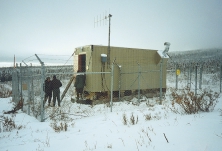
mentation reservoir, which is connected to the
70
Romashka River and eventually into the Ob.
Radioactivity
Finned cooling head
The major contribution to radioactivity in the
wastewaters has been from reactors with sin-
gle-pass core coolant systems, which were
Pressure vessel housing lid
decommissioned some time ago.
In the past few years, the release of radionu-
Thermoelectric converter
;;;;;;;
QQQQQQQ
clides to the open water environment has been
module
;
Q;;;;;
QQQQQ;
Q
Radiation shield
reduced, but previous discharges led to a
(Bio-shield)
;
Q;;;;;
QQQQQ;
Q
significant accumulation of radionuclides in
Fuel cladding
bottom sediment, biota, and the floodplain.
;
Q;;;;;
QQQQQ;
Q
Radioisotope heat source
The concentration of radionuclides decreases
;
Q;;;;;
QQQQQ;
Q
Thermal insulation
considerably with distance from the source.
;
Q;;;;;
QQQQQ;
Q
Schematic drawing of a
It thus appears that most of the discharges
;
Q;;;;;
QQQQQ;
Q
radioisotope thermoelec-
from the Siberian Chemical Combine are effec-
;;;;;;;
QQQQQQQ
Housing
tric generator (RTG).
tively removed during transport and are not
found either in the lower reaches of the Ob or
of the environment, the greatest threat from
in the Ob Estuary.
RTGs occurs if they are broken open during
The Mining and Chemical Industrial Com-
transport or as a result of malicious damage.
plex at Krasnoyarsk includes a reactor facility,
The shields are designed to withstand acci-
a radiochemical plant, and storage for spent
dents and natural disasters, and so the most
fuel assemblies. The releases of contaminated
likely cause of a breach is vandalism. If an
water have decreased considerably since the
RTG is breached, the released radioactive
two reactors at the site were shut down in
material can be detected and recovered. The
1992. However, the bottom sediments and the
fuel is in the form of hockey-puck sized pieces
floodplain are contaminated with long-lived
of ceramic material, selected for its strength,
radionuclides such as cobalt-60, cesium-137,
fire-resistance, and low water solubility. More-
and europium-152. Contamination from the
over, it is in an inert form that is not easily
Mining and Chemical Industrial Complex is
taken up by plants and incorporated into the
detectable in the Arctic about 2000 kilometers
food web.
downstream. The radioactivity concentrations
The United States is using ten RTGs as
this far away are a thousand times lower than
power sources for data collection and commu-
in the zone next to the facility, but still observ-
nications equipment at a seismic observatory
able. The results thus suggest that transport of
on Burnt Mountain in Alaska. The observa-
long-lived radionuclides from the area near the
tory is run by the U.S. Air Force and is used to
facility is low and that the discharges from the
verify compliance with nuclear test ban trea-
Mining and Chemical Industrial Complex have
ties. In August and September 1992, a tundra
had a minor impact on radioactive contamina-
fire encroached on the Burnt Mountain site,
tion of the Arctic Ocean.
damaging some data cables. The power equip-
Radioisotope
thermoelectric generators
Radioisotope thermoelectric generators (RTGs)
provide sources of power that are completely
self-contained and can operate in any weather
conditions. They have a long service life and
are reliable, making them suitable for power-
Burnt Mountain, Alaska,
ing various devices in remote areas and areas
where RTGs have been
with harsh climates, such as the Arctic.
used as power sources.
The dominant radioactive material used in
STAN READ
RTGs is strontium-90 titanate. It is a chemi-
ment was not disturbed. The fire raised con-
cally stable fuel element that is not affected by
cern among nearby inhabitants about the
extreme weather conditions or high tempera-
safety of using a radioactive material as the
tures. RTG radioactive fuel is in a leak-tight,
power source. In response, the U.S. Air Force
multi-envelope container made of heat- and
conducted an evaluation of the safety of RTGs
corrosion-resistant material. This arrangement
and alternative power sources. While the
is designed to maintain the integrity and effec-
RTGs were deemed safe, community concern
tiveness of the containment material during the
resulted in a decision to remove the RTGs and
entire service life of the generator and during
replace them with a system using batteries
possible emergencies.
charged by solar power and a diesel generator.
Being close to an RTG is not a health haz-
Planning for this has started.
ard as the radioactive material is well con-
In Russia, RTGs are used to power auto-
tained and shielded. In terms of contamination
mated meteorological stations in uninhabited

polar areas. Moreover, a network of RTG-
71
powered navigational facilities has been estab-
Radioactivity
lished for new sea routes at high latitudes.
In the Arctic, no losses have been reported, but
incidents outside the Arctic in connection with
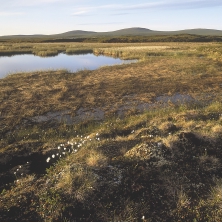
Cloudberries, Taavau-
emergency dumps from helicopters transport-
voma, northern Sweden.
ing RTGs show that the risks of losing devices
Radiocesium transfer to
during transport have to be taken into account.
some berry species is
On the coast of the Kola Peninsula, one RTG
higher than to others.
The highest recorded
has been vandalized and the radioactive mat-
transfer rates are for
erial left exposed. The fuel element itself was
cloudberries, a typical
intact and was completely recovered. There
Arctic species that grows
was thus no subsequent contamination of the
in boggy areas where
environment.
radiocesium is likely to
be mobile. Transfer is
RTGs at lighthouses on the coast of the Bar-
also high to bilberries,
ents Sea are being replaced by solar panels.
which are distributed
more widely and grow
KLAZ ARVIDSSON / WINDH · JAN TÖVE / NATURFOTOGRAFERNA
on drier types of soil.
Arctic pathways
bility in a specific area. The type of vegetation
and vulnerability
can also have a major impact both on the trans-
fer to food products and on how fast levels
The effects of radioactive contamination will
decline after initial deposition (see box below).
depend on the extent to which organisms are
exposed to radionuclides. For people, a key
factor in vulnerability (or sensitivity) to
Focus on reindeer meat
radioactive contamination is dietary habits
Reindeer meat often has a high radiocesium content. In summer,
and how these relate to the pathways of
when reindeer eat several hundred different species of green plants,
levels are lower than during the long winter. When snow covers the
radionuclides in the food web. Vulnerability
ground, reindeer survive by digging for lichen and plants beneath
is a measure of how much radioactivity
the snow cover and by nibbling at lichen from tree branches. Lichens
reaches humans through the food web for
are efficient collectors of radiocesium from fallout.
a given input to the environment. In the past
Food availability affects the amount of time it takes radiocesium
few years, it has become clear that the most
levels in reindeer meat to decline and also explains some of the spa-
highly exposed people are not necessarily
tial variation. Data from three reindeer cooperatives in northern
those in the most contaminated areas, espe-
Finland illustrate the point. Global fallout levels were similar in the
cially some years after the initial contamina-
three areas and two of them also had similar fallout from Chernobyl.
tion. This is because, for a given food, the
The major difference in the trends in the concentration of cesium-
transfer rate can be higher in one area than
137 in winter reindeer meat is probably related to the availability of
another, outweighing differences in atmos-
lichen on the ground. The northernmost area, Paistunturi, (Báisduot-
tar) is a rather barren reindeer-herding district. Levels here have
pheric deposition. Understanding the physical
declined faster than in the other two areas due to the limited lichen
and biological behavior of various radionu-
cover. The reindeer are forced to choose other foods with lower
clides in the environment is as important as
radiocesium concentrations. Currently, the levels in reindeer meat
quantifying the extent of radioactive conta-
are similar to those in the Ivalo area, which received only small
mination. Combining this knowledge with
amounts of Chernobyl fallout, levels of which have been declining
information about the extent of environmen-
since 1986 with an effective ecological half-life of six years. In con-
tal contamination provides a basis for plan-
trast, in Kemin Sompio, which contains mainly pine and spruce for-
ning emergency preparedness and response
est with more lichen available for the reindeer herds, levels of ce-
and for setting priorities for nuclear safety
sium-137 in the reindeer meat still remain fairly high 15 years after
measures.
the Chernobyl accident.
Cesium -137 in reindeer meat, Bq / kg
Terrestrial ecosystems
Winter
1000
Kemin Sompio
Paistunturi (overgrazed)
High transfers of radiocesium in Arctic terres-
Ivalo (overgrazed)
trial ecosystems are a major factor contribut-
800
Summer
ing to the enhanced vulnerability of the Arctic.
Paistunturi
600
Ivalo
Radiocesium transfers efficiently into many
food products. One typical example is the
400
lichen reindeer/caribouhuman food chain.
Another is that mushrooms and berries can be
200
very efficient in concentrating radiocesium.
The transfer to animals can vary seasonally,
0
due to changes in animal diet, and can also vary
1986
1988
1990
1992
1994
1996
1998
2000
spatially. For instance, radiocesium uptake from
Post-Chernobyl time series for cesium-137 concentration in reindeer
soil is greater from organic soils than from
meat in three areas of Finland. Levels are higher during winter, when
more highly mineralized soils. The type of soil
no green vegetation is available.
can thus be important in determining vulnera-
72
Radioactivity
Focus on mushrooms
The previous AMAP assessment identified
mushrooms as a potentially important source
of radiocesium for consumers. Mushrooms are
very important food items in Russia, whereas
the Saami population does not traditionally eat
large quantities of mushrooms. In late summer
and fall, mushrooms are also important fodder
for reindeer, moose, and sheep. Where there is
high radiocesium deposition, the consumption
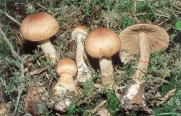
Cortinarius armillatus
of mushrooms by animals can be a significant
BODIL LANGE
indirect route of radiocesium intake by people.
Mushrooms may be very contaminated in
areas with high fallout, but new data from a
survey of several mushroom species in Finnish
Lapland shows low cesium-137 concentrations.
The highest levels were found in the non-edible
Cortinarius armillatus. Of the edible species,
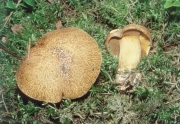
the highest levels were found in Rozites caper-
ata, Lactarius trivialis, and Suillus variegatus.
Mushrooms are an important contributor to
radiocesium body burdens if consumers do not
Suillus variegatus
BODIL LANGE
boil the mushrooms prior to consumption.
Freshwater ecosystems
nation event, simply because the contamina-
Transfers of radiocesium in Arctic freshwater
tion will not be as diluted. In the long run, the
ecosystems contribute to the enhanced vulner-
size and soil characteristics of a lake's catch-
ability of the Arctic. The particular situation in
ment area become more important. Boggy
a lake or river depends on how fast the water
catchments with a high content of organic
is replaced and on the characteristics of the
matter in the soil, which is common in many
surrounding soils. Shallow lakes with low
Arctic areas, are efficient in transporting ce-
water turnover would be more sensitive than
sium. Snow and ice cover will affect the re-
deep lakes and rivers directly after a contami-
sponse of a lake, especially in the short run.
Focus on fish
A number of fish species have been analyzed in four different lakes in northern Finland: Inarijärvi (Anárjárvi), a large regu-
lated lake; Apukkajärvi, a small, highly eutrophic lake; and Äkäsjärvi and Jerisjärvi, which are small lakes. The feeding
habits of the fish affect their cesium levels. Predatory species such as pike, perch, and burbot have the higher cesium concen-
trations in all the lakes compared to whitefish and vendace. The slight increase in radiocesium levels in predatory fish the first
two years after the Chernobyl accident has disappeared, and levels are now lower than before the accident. Differences in the
surface areas of the lakes did not seem to affect concentrations in the fish.
New data from freshwater fish in two parts of Russia show that fish caught on the Kola Peninsula, mainly in lakes, have
higher levels than fish caught in the Nenets Autonomous Okrug, mainly in rivers. The explanation may be a combination of
the Kola Peninsula being affected by Chernobyl fallout and the fact that levels in rivers are generally lower than those in lakes.
There are also some measurements for marine fish. The concentrations are low.
Cesium -137 concentration in freshwater fish, Bq/ kg
110
100
Kola Peninsula
80
60
Cesium-137,
Bq / kg wet weight
0.6-0.8
40
0.4-0.6
0.2-0.4
20
0.0-0.2
Nenets
Lowest Highest
Autonomous Okrug
Levels
0
1970
1975
1980
1985
1990
1995
2000
Dynamics of cesium-137 in freshwater fish from the Kola Peninsula
Cesium-137 concentration in marine fish 1995-2000.
and the Nenets Autonomous Okrug.
73
Radioactivity
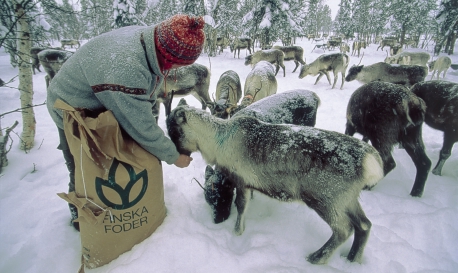
Feeding reindeer supple-
mentary food is a way to
bring down cesium levels
in the meat before
slaughter.
MAGNUS ELANDER
If fallout occurs in the winter, the radionu-
is still being transferred to food products. The
clides will not enter the water until they are
extent of this transfer depends on the time
released to runoff in the spring.
since deposition and the type of ecosystem.
In fish, the concentration of cesium is
In temperate areas with fertilized soils, radio-
affected by the amount of potassium in the
nuclide contamination of food products rap-
water. There is a similar relationship between
idly decreases in the first few months of the
strontium and calcium. Lakes in natural or
next growing season following deposition. In
semi-natural areas often have low levels of
contrast, natural and semi-natural ecosystems
nutrients such as potassium, making them
in the Arctic often retain cesium-137 in food
more vulnerable than lakes in agricultural
products for a long time. Therefore, in some
areas where fertilizer runoff raises the level of
Arctic areas, global fallout and Chernobyl fall-
some nutrients. Another factor is the feeding
out are still sources of food product contami-
habits of fish. Predatory fish can have levels
nation that need to be taken into account.
more than a hundred times higher than those
of non-predatory fish.
Cesium-137 concentration, Bq
1996
Whole-body
content, kBq
10 000
Radionuclides can transfer to foods
Deposition,
long after deposition
kBq /m2
1000
In the Arctic, there are high transfers of radio-
cesium and long ecological half-lives in various
100
food products. This means that radiocesium
contamination previously
10
deposited
1
Russia
Norway (Saami)
Norway (Saami)
Chernobyl affected
Chernobyl affected
Global fallout
(countermeasures applied)
(countermeasures applied)
Implications for intervention
Whole body content of
some populations groups
Actions in response to contamination can
of cesium-137 after
Chernobyl, showing
reduce exposures. Such actions include advice
how countermeasures
about what to eat, giving uncontaminated feed
applied in Chernobyl
to semi-domesticated reindeer, and changing
affected areas effectively
animal management practices. The counter-
reduced exposure.
measures that were put in place in some areas
after the Chernobyl accident drastically re-
duced the dose to people. Maintaining options
to reduce human exposures depends on govern-
ments' putting effective countermeasures into
place. It is more difficult to implement effective
Post-Chernobyl diet-
and long-lasting countermeasures in semi-nat-
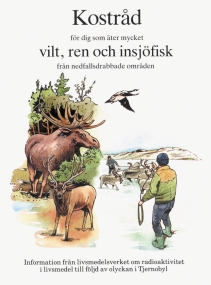
advice brochure from the
ural and natural ecosystems, such as those pre-
Swedish National Food
vailing in the Arctic.
Administration.
Developing maps of vulnerable areas prior
74
to an accident would provide a very useful tool
Radioactivity
Focus on milk
in emergency response. In combination with
Grazing animals in the terrestrial environment
estimates of deposition, such maps would
provide a major pathway of radionuclide expo-
make it possible to identify the areas where
sures to people. It is therefore of interest to study
countermeasures are most needed.
the levels in such species. Since the previous
AMAP assessment, new data have become avail-
Human exposure
able on cesium and strontium activity in cow's
milk from Finland, the Faroe Islands, Iceland,
The first AMAP assessment noted that the
Norway, Russia, and Sweden. All time series
show a peak in the early 1960s varying from
exposure of general populations in the Arctic
15 becquerels per liter in Sweden to nearly 100
to the primary radionuclides in fallout is about
becquerels per liter in the Faroe Islands. After
five times higher than in temperate areas. For
the Chernobyl accident, there was virtually no
smaller population groups within the Arctic,
fallout detected in some parts of Sweden, where-
exposures could be more than 50 times higher
as one Swedish location, northern Norway, and
than those of the average inhabitants.
the Faroe Islands had peak values of up to 20
Many post-Chernobyl studies have demon-
becquerels per liter.
strated that the highest exposures do not nec-
The milk measurements have been used for
essarily occur in the most contaminated areas,
calculating ecological half-lives. A general pic-
especially in the mid- to long-term after the
ture is that half-lives are short during the first
accident. The reason, as explained above, is
year after fresh fallout and then become longer
variation in soils, vegetation types, and food
and longer, unless new fallout changes the cont-
aminants load in the environment. For example,
webs. For people, food habits and the applica-
at a Finnish dairy in an area affected by Cher-
tion of countermeasures to reduce exposure
nobyl fallout, the effective ecological half-life
can have dramatic effects on dose. Examples
for cesium-137 was less than a year-and-a-half
of countermeasures include dietary advice and
in the years immediately after the accident but
feeding uncontaminated food to reindeer to
almost ten years by the late 1990s. Another
reduce radionuclide concentrations in the meat
conclusion is that ecological half-lives vary
before slaughter.
geographically.
The previous assessment identified several
groups that receive higher doses than the aver-
Cesium-137 in milk, Bq / liter
age Arctic inhabitant. A common factor is that
60
they rely heavily on terrestrial food products,
Faroe Islands
Northern Finland
such as reindeer or caribou meat. Mushrooms
50
Northern Sweden, Tärnaby
and freshwater fish are other important sources.
Northern Sweden, Vittangi
The lowest anthropogenic doses were those in
40
Greenland and Iceland, mainly because marine
foods are more important in the diet.
30
The current assessment complements the
previous picture with new data from the Faroe
20
Islands and from an in-depth study of some
communities in northwestern Russia.
10
The Faroe Islands
0
The previous AMAP assessment made dose
1965 1970 1975 1980 1985 1990 1995 2000
assessments for populations in many parts of
Cesium-137 concentration in cow's milk.
the Arctic. The Faroe Islands were not included,
Cesium -137 in lamb meat, Bq / kg wet weight
1000
and therefore complementary information is
provided in this report. The graph to the left
depicts radiocesium concentration in lamb meat
in the Faroe Islands over the period 1960-2000.
100
There have also been several measurements in
milk and drinking water. The dose to the aver-
age resident of the Faroe Islands has been esti-
mated at 3.5 millisieverts. When compared
with the doses to the average populations of
Cesium-137 levels in
10
other countries estimated earlier, this shows
lamb meat in the Faroe
that the population of the Faroe Islands has
Islands. Prior to the
received the second highest average dose in
1990s, samples were col-
the Arctic. The highest doses (11.6 millisieverts)
lected from different
localities.
to the average residents were received by the
0
1960
'65
'70
'75
'80
'85
'90
'95
2000
inland population of Northern Canada.
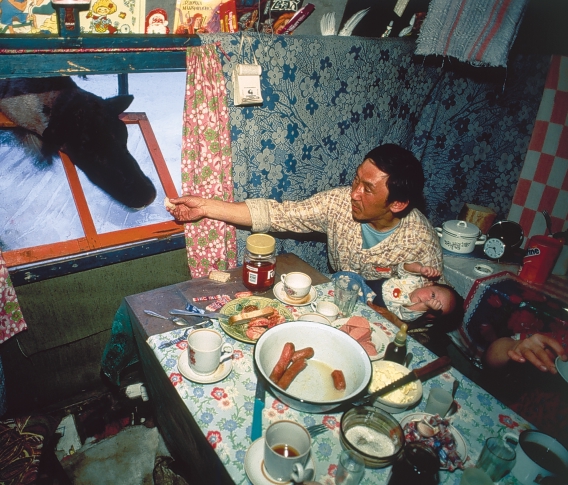
STAFFAN WIDSTRAND
Nenets nomads.
Northwest Russia
The new Russian data are for three different
ity concentrations in agricultural products
population groups living at the sites indicated
were similar in all three regions.
on the map: indigenous people, mainly rein-
The dose estimates show that reindeer her-
deer herders and their families; rural residents
ders on the Kola Peninsula have an internal
Study areas for human
and inhabitants of small villages and settle-
dose of 0.18 millisieverts per year on average.
exposure assessment in
ments with a mixed diet; and the population
Reindeer consumption is by far the most im-
Russia.
of big ports and cities, whose inhabitants
mainly consume food products from outside
300 km
Novaya Zemlya
Amderma
the region.
Dietary surveys showed that rural inhabi-
Barents Sea
Pechora Sea
tants consume, on average, two to four times
less reindeer than the reindeer herders and
their families. Their fish consumption is similar
Nenets Autonomous Okrug
ircle
to that of reindeer herders. Urban inhabitants
Murmansk
Iskateley
Arctic C
Naryan Mar
consume only small quantities of reindeer
Murmansk Oblast
Lovozero
meat. The food products with the highest
Kola Peninsula
activity concentration are reindeer, mush-
Umba
rooms, and freshwater fish. The concentration
Dolgoshcheley
of cesium-137 in these foods is two orders of
Mezen
White Sea
Mezen'sky Okrug
magnitude higher than in locally produced
agricultural food products. The activity con-
Arkhangelsk
Severodvinsk
centrations in natural products were higher on
the Kola Peninsula than in the Mezen districts
and the Nenets Autonomous Okrug. The activ-
Cesium -137, Bq / year
European spent nuclear fuel reprocessing
76
60 000
plants, and fallout from the 1986 accident
Radioactivity
at the Chernobyl nuclear power plant in the
Ukraine. Doses to humans are derived mainly
Intake of cesium-137 in
from global fallout and fallout from the Cher-
various foodstuffs by the
nobyl accident.
average Arctic popula-
tions and selected groups
In general, levels of radionuclides in the
50 000
in Arctic countries.
Arctic environment continue to decline. The
The selected groups are:
exceptions are seawater levels of the long-lived
Northern Canada
water-soluble fission products technetium-99
Old Crow diet (a com-
and iodine-129. These increases originate from
munity which relies
nuclear fuel reprocessing in Western Europe.
heavily on caribou meat).
The current doses to the inhabitants of the
40 000
Greenland
Arctic from radionuclides originating from
A hypothetical group
spent nuclear fuel reprocessing plants are
assumed to consume
local products rather
small. The uncertainty surrounding the path-
than imported, and
ways to, and effects of these radionuclides in
freshwater rather than
the Arctic show that further assessment is
marine fish.
30 000
needed. Impacts on the Arctic should be con-
Northern Norway
sidered when evaluating discharge reduction
People associated with
measures.
reindeer breeding.
Radiation accidents are a major concern.
Arctic Sweden
Reindeer herding popu-
The greatest threats posed by nuclear activities
lation.
are associated with potential accidents in
Finland
20 000
nuclear reactor operation and the decommis-
Saami reindeer breeders.
sioning of nuclear-powered vessels. For exam-
Russia
ple, models show that a major accident at the
Reindeer breeders in
Kola nuclear power plant in Russia resulting
eastern and western
in substantial releases of radioactive materials
Russia.
to the atmosphere would require countermeas-
Potatoes
10 000
ures to avoid high radiation doses to the re-
Mutton
gion's population. Major efforts are underway
Freshwater fish
to reduce radiation risks connected with nu-
Mushrooms and berries
clear reactors and radioactive waste handling.
Other
Sheep- and goat milk
However, further improvements in nuclear
Reindeer/game
safety and radioactive waste management are
0
still warranted.
Selected groups (right)
Average Arctic population (left)
Since the previous AMAP assessment, a nu-
Canada
Norway Sweden Finland
Russia
Greenland
clear submarine accident occurred in the Arctic,
Faroe Islands
when the submarine Kursk of the Russian
portant source of radiocesium. The rural
Northern Fleet was lost in the Barents Sea af-
group not associated with reindeer herding
ter an explosion on board. The Kursk has been
had an average internal dose of 0.07 millisiev-
recovered and monitoring shows that the acci-
erts per year, or approximately one-third of
dent did not result in any measurable releases
that of the reindeer herders. Reindeer meat is
of radionuclides to the Arctic environment.
the most important source of radiocesium in
To reduce the risk and to mitigate the conse-
this group as well, but fish, mushrooms, and
quences of possible future accidents, work is
berries were also significant contributors.
being done on risk management and risk
The doses for the urban group were a thou-
analysis of nuclear activities and assessments
sand times lower than for the herders, ranging
of the vulnerability of Arctic areas. This gives
from 15 to 25 microsieverts per year.
a basis for improved emergency prevention,
In summary, current doses to inhabitants in
preparedness, and response for nuclear inci-
the Russian Arctic are much lower than during
dents.
the 1960s when global fallout from atmos-
For human health, there is increasing recog-
pheric testing was being deposited. Individual
nition that vulnerability and dose can vary a
doses on the Kola Peninsula are higher than in
great deal, even over geographically limited
the other two study regions.
areas. Because of high transfer and long eco-
logical half-lives, vulnerability assessments
need to take into account previous deposition.
Summary
Previously, the focus of radiation protection
has been on the protection of human health.
The major sources of radioactive contamina-
A new initiative in which AMAP has partici-
tion of the Arctic environment remains fallout
pated and that is highlighted in this report is
from atmospheric nuclear weapons testing in
an attempt to develop a basis for protecting
the period 1945 to 1980, discharges from
the environment from the effects of radiation.